Summary of Learning

When I first look back on my very first day of ECS 210 and then to my very last few days, I’ve realized that the class wasn’t exactly what I thought it was going to be like. I was a little unsure about what it really was going to be like or about. Honestly, I was a little worried it was going to be a lot of heavy document readings and a lot of theory work. It wasn’t near what I expected and I ended up really enjoying going to class.

As a future teacher I still feel there are areas I could use some growth in, but I feel like I might always have room to grow and improve inside and outside of my classroom. I’m still a little nervous about things like making a mistake while teaching Treaty Education but in the next two years I plan on learning more to help me feel more comfortable.

This class was the first class I’ve taken that has allowed me to really look deeper into the curriculum and create a unit and lesson plan. I found that very helpful because it was an area I had no experience in before. Video

Overall, this class has taught me many new things that I plan on using and learning more about in my future.


Mathematics

Math has always made sense to me and I never struggled in my math classes. In my high school (grade 7-12) math seemed to have a big focus on equations and solving them. Throughout grade 10 to 12 everyone in my math classes seemed to have caught on just as fast as I did. My senior math teacher was the best and truly cared about us understanding the concepts she was teaching. She was always willing to give extra help and never assumed that we all learnt at the same pace. However, we always just learnt one ‘correct’ way to do math and never really explored other math forms. I always thought everyone did the same math, no matter their cultural background.


The first main difference with Inuit math is the language differences. Indigenous languages are most often verb based where English is not. The development of the Inuit numeration system is influenced by the environment, culture and language. Whereas Eurocentric math doesn’t place a very big emphasis on these things. Being able to graph or solve equations seems to be a bigger focus in Eurocentric math than in Inuit math. Math is not seen as a universal language and different cultures have developed different tools for solving math depending on their environment or/and needs. Traditional Inuit teaching is based on observing an elder or listening to enigmas. This is different than what most of us are aware of where the teacher would teach from the front of the class.

Personal Biases

My upbringing and schooling have played a role on how I view and read the world around me.  I grew up in a small town with very little diversity. My school teachers were mainly white females with the occasional white male. The stories I read in school were almost no different than my own story and I could relate to the vast majority of them. Before moving to the city, I only ever read or learned about people similar to me, white, middle-class, with a heterosexual family. I feel like growing up I was never made aware of other cultures. On the tv and in stories everyone seemed to look and live a similar life to mine. My biases make it harder for me to view viewpoints outside of my own. My community is surrounded with white, middle-class, heterosexual families so therefore I have never had to look beyond what was familiar and comfortable to me. The one major way I see myself working against my biases is to first acknowledge that I have them and to not ignore having them. This may take stepping into uncomfortable situations to work on improving my biases. After one’s biases are acknowledged then they can truly start to unlearn or critique their viewpoints. When I think back to my schooling I find myself wondering if my teachers maybe chose to teach those classics because it fit into their comfort zone?

When I think back onto which single stories were present in my own schooling I first think of the story books that taught me how to read called Dick and Jane. I loved these books as a kid and would sit and read them for hours repeating the words over and over again; “Look, Jane. Look, look. See Dick. See, see. Oh, see. See Dick.” As a four-year-old white girl I never saw anything wrong with these stories. Actually, I never really saw anything wrong with them until I took a closer look at them not very long ago. Stories like these are very contradicting today, they may be a great resource for teaching young children to read but they are limiting children’s lenses when they look at the pictures of what might have been known as ‘the perfect family’. My teachers obviously never saw a problem with using these stories because they could also relate to the stories. Even in a classroom that is not very diverse it is important to bring different perspectives in so students can see these differences and discover where they truly belong.

Citizenship Education

Overall, I don’t feel that citizenship education was seen as that important throughout my schooling. If my teachers were to incorporate citizenship education their focus had seemed to be on a good citizen being one who volunteers, and contributes to our community through volunteering or voting.

When I think about citizenship education I think specifically of grades 3, 10, 11, and 12. I first think of my grade 3 class and remember something we use to do called “Byers Bucks”. Byers Bucks was something we did throughout all of grade 3. Every time we completed a job or handed in our assignments on time we would get “Byers Bucks” that were slips of paper that said 1 Byers Buck across the middle of it with money signs along the border. Once we collected our bucks we could put them in our bags that went in our desks. So, at the end of the month my teacher would lay out pencils, colouring books, pencil cases, etc. Then she would draw names out of a hat and we would get to buy one of the things she had laid out with our Byers Bucks.

Also, in grade’s 10, 11, and 12 there was a big emphasis on learning the government and voting. I remember things like voting, learning government, and organizing events like community BBQ’s. I remember my high school social studies classes pushing for us to really understand the government systems and had us do mock voting every year, but especially the years where there were Provincial and Federal government elections.

Overall, I would say my schooling focused on both the personally responsible and participatory citizen. In my grade 3 class the personally responsible citizen would have been the main focus. We learnt to obey laws by having to pay for our things, picking up litter around the classroom earned us bucks, and other good community things to earn bucks. This also taught us about positive ways to contribute to our society making us a good citizen to our classroom. I notice more personally responsible citizen education in my younger school years and then grades 10, 11, and 12 there was more participatory citizenship education integrated. In my high school years, we ran many of the community and school events. Instead of just participating we were the ones to organize them. One activity that sticks out the most was our grade 12 community BBQ’s that was to fundraise for our graduation ceremony. I never remember really talking about social justice problems.

My high school teachers’ views seemed to place a big emphasis on voting and government being the most important thing in making good citizens. This view made it possible for us to learn how to give back and to contribute to our society through things like voting and volunteering. However, it never really allowed for us to look deeper into other cultures or why their society’s and citizens looked different than ours, or why social justice issues were a concern.

This citizenship education has shaped me because I enjoy helping out and helping others around my community.

Treaty Education

Hello, Intern


Treaty Education is in the curriculum and therefor is the teacher’s job to teach it to their students, even if they don’t agree with it. It is sad to hear that the teachers in your school and the co-op teacher don’t feel the need to teach Treaty Education for reasons like there are no First Nation students. Don’t be afraid to continue teaching Treaty Education and to make mistakes. It is okay to make mistakes when teaching any subject but it is important to learn from them and to move forward. Treaty Education won’t always be easy and you may continue to have these tough times throughout your career and times like this can be more difficult without the other teachers or parents support.

One place you may want to start is by approaching the other teachers and trying to talk to them and your co-op teacher about the importance of Treaty Education. These teachers may not be educated in how important it is for all students, no matter their culture, to learn about Treaty Education. It is important for everyone in this situation to know that we are all treaty people and that we all share the land. It is our story about what was gained and what was lost when treaties were signed. I also have read about this topic and one quote I remember reading is that in order to tell a certain story, we sometimes must tell a different story. Promoting this logic to the teachers in your school might change their minds and see that Treaty Education is important for many reasons and they may be interested in approaching this with you.

Placing an emphasis on learning relationships, and the need to learn and build a strong relationship with Indigenous people can go a long way. Creating these relationships is almost more important in a school with not very many First Nations students because they don’t have those relationships already. Having the teachers and students see that these relationships rely on understanding the history of this land helps them comprehend that we need to know the history so we can move forward and build strong relationships.

One way that might help your students understand the importance of Treaty Education is to not just lecture them on it but to do projects, big or small. Students can learn by hands on activities and some students will get more out of a project instead of lectures and tests. Not everyone has the resources to go on field trips but going to something like a powwow may inspire your students to learn more. However, this may be easier to do with younger students but finding something your students might be more interested in learning than dates of historical events might help their attitudes. Things like doing Indigenous art or building Indigenous instruments might begin to spark your students interests in the Indigenous culture.

I feel that it is important for you to not give up and to try talking to them about how Treaty Education is more than just sitting down and learning the dates of historical events. Once the students start to acknowledge and engage in the importance of Treaty Education the other teachers and their parents can learn from them and see through the students how important it actually is. DON’T GIVE UP! It may feel like the easy way out but stick to what you believe in because Treaty Education is only growing.


– Makenna Morrison

Developing a Formal Curriculum

Part 1) School curriculum is developed by many people. It takes more than just one or two people to develop and implement a formal curriculum. The government plays a major role in the development of a new curriculum along with teachers, experts, historians, and companies. It is mentioned in Levin’s article how education governance typically involves a combination of national, local and school participation but the final authority falls under national. It is also mentioned that however the cabinet has one person in charge of education, many other political leaders may also have views and if curriculum decisions go through a political vetting process there may be all kinds of political influences including preferences of individuals. The many groups of people who come together to build a curriculum will look at data and past curriculums but in the end the government seems to have the most authority when it comes to implementing it. Groups that mainly sit on these formal curriculum development boards include experts, parents, and teachers. Teachers play a key role because they have been inside the classroom and are the ones who will be implementing the curriculum to their students. Levin suggests in his article that it is important to involve community members because their views and thoughts need to be considered. One thing that surprised me is that experts have a major say and that they may not consider the teachers abilities. Some teachers may not be capable of teaching a topic that is beyond their knowledge. Levin describes that a colleague described a high school mathematics curriculum as “developed by the six best teachers in [the province] and they are the only ones who could teach it successfully”. I was also surprised that scientists or tradespersons have a say because it mentions that they usually feel their field is important or more important than others.


Part 2) The first connection I noticed between the Treaty Education document and Levin’s article is the amount of people it takes to produce a curriculum. In both documents there wasn’t just one or two people involved but multiple people and multiple groups. Also, a connection is that it is important to have experts of that field helping produce these forms of documents. The formal curriculum has experts who give their input and the Treaty document also had experts in this field by bringing in elders to help create the document. Some tension I might imagine is the different views between the Indigenous community and the Ministry of Education. The things the Ministry of Education views as a must to include might be something the Indigenous community doesn’t feel the need to add and vis versa. I would hope teachers wouldn’t feel this way but one tension may be teachers feeling the Indigenous culture is being over taught and deciding not to teach the Indigenous culture as much or at all.

Learning from Place

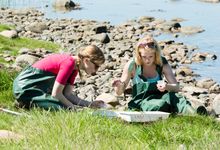
Trips, like the 10 day river trip, are helping move towards reinhabitation and decolonization. Bringing people in the community, of all ages, together played a major role in this article. One-way people can learn is through the stories/experiences of others. Bringing the elders and the young children together allowed for them to learn from each other. Forming relationships among all people is one aspect in this article that is helping move towards reinhabitation and decolonization. Other ways this article pointed out are respecting the land and teaching about the land outside instead of in a classroom. Recovering tradition and recognizing it is also very important. Speaking Cree words and understanding them helps promote the loss of that language and acknowledges its significance.

When I think of my future classroom I imagine a lot of experiential learning. I love the idea of taking students outside to learn about things in nature. I remember when I was in about grade 2 we went on a field trip to Moose Mountain Provincial Park and went hiking and collected things like leaves and rocks to take back to the classroom to look at. Also, I grew up close to a reserve and attended a few powwows throughout elementary and high school. I remember watching the young children dance and still remember parts of it today. Doing these types of field trips with my future students is something I would love to be able to do. Even small field trips around a local community is something I would like to do. I also remember times in school where we would just go outside and sit at tables to do some of our school work. This was one of my favourite things because we got to get out of the classroom. I want to be able to give my future students these types of opportunities to extend their learning.

Place-Based Learning | EdutopiaLittle Current Public School powwow celebrates First Nations cultureSchools Need More Field Trips – The Express

“Good” students

A good student can be seen as someone who learns more by the end of the year. A good student accomplishes this by following the rules, behaving in class, and completing assignments. The difference between a good student and a bad student, according to common sense, is a good student can be seen as someone who is interested in learning and shows their interest through classroom engagement. A good student is someone who works hard to get good grades and can be seen as someone who values their education by wanting to receive good grades.

A privileged student is one who shows an interest in their learning and is engaged in class discussion. These students stay engaged and ask their teacher multiple questions either about assignments, or what their learning in general. Privileged students might also be those who catch on to new material faster than others. All students learn differently. If a teacher was to see a student not focusing during class they may think they’re a bad student for not engaging. However, that student might just look like they’re not focusing because they really just don’t understand what is being taught.

Being able to see or understand others perspectives may be difficult because they are most likely different from the teachers or other students. It might not be impossible but it may be difficult to view common sense from a student’s view. Different cultures have different things they view as being common sense and a teacher may not know what those are until getting to know that culture. It may be hard to believe that when teaching a topic that has background knowledge that what is seen as common sense to the teacher, may not be common sense to all the students inside the classroom.


Disability inside Classrooms

For my critical summary I have chosen the topic of disability inside the classroom. Disability has always been an interest of mine and I feel that it is mainly because my younger brother has a physical disability, dwarfism. While watching him grow up I have both noticed the things the schools have done and have not done to help make his days at school easier. The first article I’ve decided to focus on is called Calling forth disability in the Classoom by Michael Gaffney. Firstly, this article examines how studies have shown that separating disability and impairments can be difficult. One researcher mentions how he feels teachers play one of the most important roles when helping a disabled or impaired student succeed and how they take on a responsibility for setting up their classroom to ensure all students succeed. When inside the classroom, it is also mentioned that teacher student relationships are the foundation for comforting any student. Throughout the article it mentions the people, relationships and assorted tools and signs which operate as mediating devices inside the classroom. Also, there is multiple times it mentions teacher aide supports and how having access to a TA may be the difference between a disabled or impaired student succeeding or continuing to struggle.

This article goes on to explain a case study, done to help understand the difference between impairment and disability of a young student. The study is of a learning-disabled student and his engagement in the classroom’s literacy activities. It is said that the young boy has a cognitive impairment affecting his ability to remember ‘easy’ concepts.  The student wants to succeed on his own but at times cannot. The article goes on to talk about how all students enjoy being independent and as they grow older won’t always want help from their teacher. Adjusting to each student’s needs was a major topic in this article. The article explains how the difference between a disabled student and a student with an impairment will always be difficult but no matter their label all students should be given the proper resources needed. It is possible to identify features of each but they sit alongside and interact. Lastly, it is mentioned that schools still continue to struggle with what is ordinary for disabled students, because by definition they have already been seen as unordinary, making it difficult to look away from disabilities and set up a classroom environment suited for all.


Some next steps I may take are exploring the topic of disability inside of a certain subject area. Looking more deeply into how disabilities may limit students in a certain subject is something that interests me because in one subject the student’s disability may not hold them back but in a different subject their disability may cause them to struggle. Overall, I plan on continuing looking into the impact’s disabilities have inside the classroom both on the teacher and on all the students.

Blog #2

When I look back on being in both elementary and high school I found that I experienced the Tyler rationale throughout both my elementary and my high school years. Going to school in a small town allowed me to connect personally with my teachers. I think having this bond allowed for them to focus on more than just my final grades but I don’t think that means they didn’t use the Tyler rationale. A handful of my elementary teachers followed a strict schedule on what needed to be done for that day and if anything went “off track” they became very flustered. However, when I think back on my schooling experience I can think of more specific Tyler rationale experiences throughout my high school years. During all of my high school math classes we were expected to follow a strict time schedule. My math teacher never went off track of the schedule and if we didn’t have time to work on questions in class they were assigned for homework because we needed to move on the next day. Also, throughout my high school years I was fortunate to have a credited math and English teacher but my science teachers were not credited at the time so I had to write departmentals for my grade 12 science classes.  These tests were difficult and are an example of the Tyler rationale because we were expected to know everything on that test that the government found important.

The Tyler rationale experiences also almost always makes it difficult to focus on what children are really learning. This also ignores the idea of content and can give students little to no voice of their own. Students are all told what they must learn and how they will learn it. This form of teaching doesn’t leave much room for creatively and allowing students to think critically. The Tyler rationale may be impossible to allow students to think on their own and to become critical thinkers.

However, the Tyler rationale can be beneficial because it allows for a prepackaged curriculum. This would mean no matter what school or who the teacher is the students would all be receiving the exact same information. Having all students learn the exact same information would benefit students who do have to write government tests. Also, it allows for organization which can be very useful inside a busy classroom that may need more structure. Another benefit to the Tyler rationale is that it gives teachers guides to what is needed to be taught.

Design a site like this with WordPress.com
Get started